Product design
Product design sits at the intersection of engineering precision and human-centred thinking. It is not merely about making objects look appealing—though aesthetics certainly matter—but about orchestrating a complex balance between functionality, manufacturability, cost efficiency and user experience. Whether you are designing industrial machinery, transport components or building facades, the decisions made during the design phase ripple through every subsequent stage of production and use.
This category explores the full spectrum of product design considerations, from the commercial impact of visual branding to the metallurgical choices that determine component lifespan. Think of it as a map: each section below introduces a critical territory, while the detailed articles within offer the granular knowledge needed to navigate specific challenges. By understanding these interconnected disciplines, you will be better equipped to make design decisions that reduce costs, improve performance and create lasting value.
Why does functional aesthetics drive commercial success?
The appearance of machinery and industrial equipment is often dismissed as superficial—a concern for consumer products rather than factory floors. This assumption proves costly. Research consistently shows that buyers associate visual coherence with quality and reliability, often paying premiums of 15-20% for equipment that projects a professional image.
The ROI of cohesive visual branding
When every component of a machine shares consistent colours, finishes and proportions, it signals organisational competence. Clients visiting your facility form judgements within seconds. A machine with mismatched panels, exposed wiring and inconsistent textures suggests rushed production, regardless of its actual engineering quality. Conversely, cohesive branding builds trust before a single specification is discussed.
Ergonomics and operator wellbeing
Functional aesthetics extends beyond appearance to encompass how products interact with human bodies. A control panel that looks sleek but positions buttons awkwardly can cause repetitive strain injuries over months of use. Similarly, cluttered interfaces increase cognitive load and slow reaction times. Effective product design anticipates these human factors, creating equipment that operators can use efficiently without physical strain.
- Surface finishes influence grip and cleaning requirements
- Control placement affects posture and movement patterns
- Visual hierarchy guides attention during critical operations
- Colour coding reduces errors under time pressure
Bespoke components versus standard parts: finding the balance
Every product designer faces a fundamental choice: specify off-the-shelf components or commission bespoke parts. Neither approach is universally superior. The optimal strategy depends on production volumes, performance requirements and long-term maintenance considerations.
When standard components cost more
Standard brackets, fittings and housings seem economical until you factor in adaptation time. Modifying a generic component to fit a specific application often requires machining, additional fasteners and assembly workarounds. These hidden costs can accumulate to significant annual figures—sometimes exceeding £20,000 in labour alone for a single product line. Understanding the true total cost requires tracking not just purchase prices but installation time and failure rates.
The break-even calculation
Bespoke components involve higher upfront tooling and design costs but lower per-unit production expenses at scale. The break-even point—where custom parts become more economical than adapted standards—varies by complexity but typically falls between 500 and 2,000 units annually. Below this threshold, off-the-shelf solutions often win; above it, investment in bespoke tooling pays dividends.
Prototyping and validation
Before committing to production tooling, designers must validate custom parts. Two primary technologies dominate this space: 3D printing for rapid geometric verification and CNC machining for functional testing with production-grade materials. Each serves different validation needs, and choosing correctly can compress development timelines significantly.
How does modular design enhance manufacturing agility?
Static production lines represent substantial capital investment but limited flexibility. When product demand fluctuates seasonally or market requirements shift, monolithic systems become liabilities. Modular design offers an alternative philosophy: creating interchangeable units that can be reconfigured as needs evolve.
The advantages extend beyond flexibility. Modular cells typically command better resale values than bespoke integrated systems, reducing the financial risk of capacity investments. However, this approach introduces challenges around electrical compatibility, connector standardisation and storage protocols for idle units.
Avoiding vendor lock-in
Proprietary connector systems can trap manufacturers into single-supplier dependency, eliminating competitive pricing and creating vulnerability to supply disruptions. Savvy product designers specify industry-standard interfaces wherever possible, preserving future options even when initial convenience favours proprietary solutions.
Sustainable materials in industrial applications
Environmental performance increasingly influences both regulatory compliance and commercial positioning. Buildings seeking BREEAM Outstanding certification command measurably higher rental yields, creating financial incentives for sustainable material selection. Similar dynamics apply across transport, machinery and consumer products.
Material selection trade-offs
Every material choice involves compromises. Timber cladding scores well on embodied carbon but requires ongoing maintenance. Recycled steel offers durability with reduced environmental impact compared to virgin production. Aluminium provides excellent strength-to-weight ratios but carries substantial energy costs during primary production—a factor often overlooked in lifecycle assessments.
- Timber: renewable, carbon-storing, maintenance-intensive
- Recycled steel: durable, recyclable, moderate embodied energy
- Aluminium: lightweight, corrosion-resistant, high production energy
Thermal performance and compliance
Building regulations require careful attention to junction details where different materials meet. Poor detailing at these interfaces creates thermal bridges that undermine overall insulation performance and risk non-compliance with Part L requirements. Product designers working on facade systems must coordinate closely with thermal engineers to eliminate these weaknesses.
Advanced composites for transport applications
Weight reduction directly improves vehicle efficiency—a critical consideration as electric powertrains demand every possible range extension. Composite materials, particularly carbon fibre reinforced polymers, enable weight savings of 20% or more compared to steel structures while maintaining or exceeding structural requirements.
Beyond weight: stiffness and safety
The case for composites extends beyond simple mass reduction. Carbon fibre offers exceptional stiffness-to-weight ratios, allowing designers to create structures that resist deflection under load more effectively than equivalent steel components. For rail applications, resin selection becomes critical: phenolic formulations meet fire safety standards that epoxy systems cannot achieve.
Manufacturing integrity and recyclability
Composite manufacturing introduces failure modes absent in metalwork. Delamination, void formation and incorrect fibre orientation can create structural weaknesses invisible to visual inspection. Quality assurance protocols must address these risks systematically. Additionally, end-of-life considerations demand attention as regulations increasingly require recyclable designs.
Digital tools for collaborative product design
Modern product design rarely happens in isolation. Engineering teams span multiple locations, specialist consultants contribute remotely, and manufacturing partners need access to current models. Cloud-based CAD platforms address these collaboration requirements while eliminating the version control disasters that plague email-based workflows.
The transition from local to cloud infrastructure involves careful planning around data migration, licensing models and workstation configuration. Perpetual licenses suit stable teams; subscriptions offer flexibility for project-based scaling. Virtual workstations require adequate bandwidth and careful optimisation to deliver responsive performance for graphically demanding applications.
Material science for demanding environments
Component longevity depends heavily on material selection matched to operating conditions. Standard stainless steel grades that perform admirably in general industrial settings may pit and crack when exposed to chloride-rich environments such as coastal locations or chemical processing facilities.
Surface treatments and alloy selection
Surface hardening processes like nitriding extend gear life by creating wear-resistant layers, but specifying appropriate treatment depths requires understanding load patterns and failure mechanisms. For high-temperature applications, exotic alloys including Inconel and Hastelloy offer capabilities that standard materials cannot match—at corresponding cost premiums that demand careful justification.
Testing and quality verification
Coating thickness and hardness measurements validate surface treatments. Vickers testing suits thin coatings where Rockwell methods would penetrate through to substrate material, producing misleading results. Matching test methodology to application requirements prevents both under-specification and unnecessary expense.
Product design excellence emerges from understanding these interconnected disciplines and making informed trade-offs between competing requirements. The articles within this category explore each topic in depth, providing the detailed knowledge needed to apply these principles to your specific challenges.

Metallurgical Solutions: Extending Component Life in Corrosive Environments
The key to extending component life is not simply choosing a « better » alloy from a spec sheet, but identifying and neutralizing the specific metallurgical failure mechanism that will inevitably attack it. Standard stainless steel fails in chloride environments due to…
Lire la suite
Cloud CAD Collaboration: How to Enable Remote Engineering Teams to Work in Sync?
Managing remote engineering teams often means drowning in version control errors and production delays. A true cloud CAD strategy is not just about sharing files; it’s about building a resilient data integrity system with a single source of truth. Transitioning…
Lire la suite
Smart Composites in Transport: Engineering Beyond a 20% Weight Reduction for EV Range
Achieving a 20% vehicle weight reduction with smart composites is not about simple material substitution, but about mastering the engineering trade-offs that unlock true performance gains and cost savings. The high stiffness-to-weight ratio of composites enables radical part consolidation, offering…
Lire la suite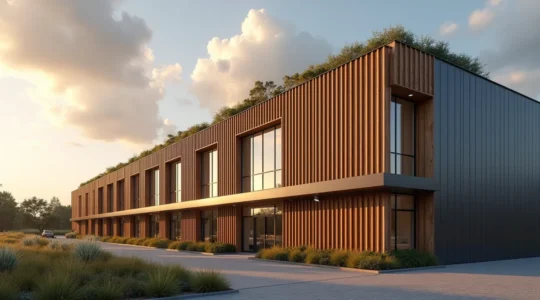
Achieving BREEAM ‘Outstanding’: Integrating Sustainable Materials into Industrial Facades
Achieving a BREEAM ‘Outstanding’ rating is a financial strategy as much as a design exercise; the key is to maximize the quantifiable ROI of every facade specification. ‘Outstanding’ certified buildings can achieve rental premiums of over 12%, turning sustainability into…
Lire la suite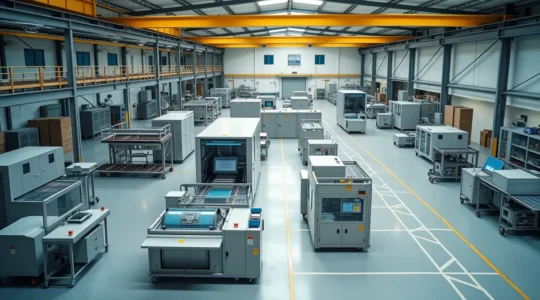
How Modular Equipment Helps UK Factories Adapt to Seasonality Without CAPEX Spikes?
The key to surviving seasonal demand swings isn’t just buying modular equipment; it’s enforcing the operational discipline that transforms hardware into true, cost-effective agility. Static production lines create immense hidden costs during changeovers, while modular cells offer high resale value,…
Lire la suite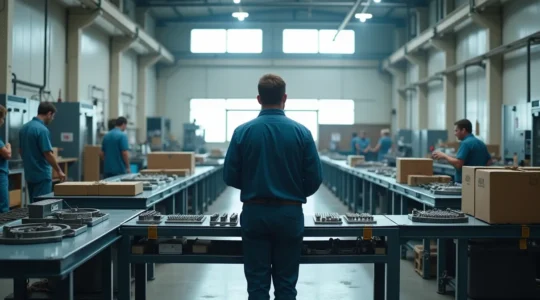
Bespoke vs Off-the-Shelf: Which Component Strategy Reduces Assembly Time by 30%?
The persistent friction from ill-fitting standard parts is not just an annoyance; it’s a quantifiable drain on profitability hidden within your assembly line. Adapting off-the-shelf components introduces non-value-added labour, creating a « hidden factory » that inflates operational costs. A strategic pivot…
Lire la suite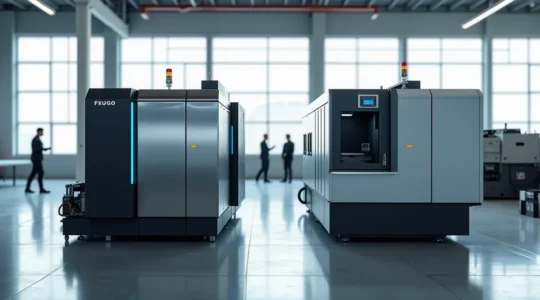
Why Ugly Machinery Is Costing You Clients: The ROI of Functional Aesthetics
Outdated machine design is no longer just a cosmetic issue; it’s a direct threat to your profitability and market share against sleek European competitors. Strategic aesthetics can justify premium pricing, as visual appeal is a primary driver in B2B purchase…
Lire la suiteHow rapid prototyping is accelerating product development
The landscape of product development is evolving at an unprecedented pace, with rapid prototyping technologies at the forefront of this transformation. As companies strive to innovate faster and more efficiently, the ability to quickly create and iterate on physical prototypes…
Lire la suiteHow can you integrate functional aesthetics into product design?
Functional aesthetics in product design represents the perfect marriage of form and function. It’s about creating objects that not only look beautiful but also perform exceptionally well. This approach challenges designers to think beyond mere visual appeal and consider how…
Lire la suite5 Groundbreaking Material Innovations in the Design Industry
The design industry is on the cusp of a material revolution. Emerging technologies are paving the way for innovative materials that promise to reshape how products are conceived, manufactured, and used. These advancements not only enhance performance but also address…
Lire la suite